The Season Ahead
In this issue, our writers and editors (identified by their initials) highlight some of the events they’re looking forward to, now through December. The events are arranged chronologically to help you plan your schedules. Of course, many other worthy performances are given all year throughout the Bay Area, so it pays to check SFCV’s comprehensive Performance Calendar, now with many more listings from a wider range of presenters, as well as the more selective filter of our critics’ top picks in the popular weekly Listening Ahead column.
September
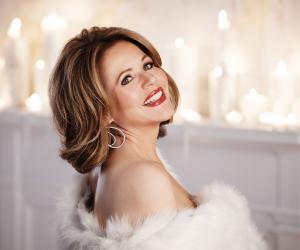
Angela Gheorghiu in Concert
One of the highlights of the 2007 opera season was Angela Gheorghiu’s San Francisco Opera debut. (Read review.) Appearing as Magda in Puccini’s La Rondine, the Romanian soprano sang with warmth, radiant tone, and indelible theatricality. This month, Gheorghiu returns to the Bay Area for a concert at Zellerbach Hall. Joining the San Francisco Opera orchestra under Marco Armiliato, she’ll perform arias by Puccini (including “Ch’il bel sogno di Doretta” from Rondine), Verdi, and Giordani, as well as selections by Delibes, de Curtis, Ernesto Lecuona, Eduardo di Capria, and Romanian composer George Grigoriu. The event is copresented by San Francisco Opera and Cal Performances.
Sept. 6, 7:30 p.m., Zellerbach Hall, UC Berkeley Campus, $35-$100, (510) 642-9988, www.calperformances.org. (G.R.)

Angela Gheorghiu
Photo by Eduard Sandu
New Century Chamber Orchestra Season Opener
It’s a new era for the New Century Chamber Orchestra. Following an extensive two-year search for a music director to replace Krista Bennion Feeney, the San Francisco-based string ensemble named violinist Nadja Salerno-Sonnenberg to the post earlier this year. Salerno-Sonnenberg officially takes up the reins Sept. 11, as the group launches its 2008-2009 season with a program titled “Nadja Plays Piazzolla: the Sounds of Brazil and Argentina.” She’ll serve as soloist for Piazzolla’s Four Seasons of Buenos Aires and Ginastera’s Glosses on Themes by Pablo Casals. The program also includes the premiere of Impressions, a suite for chamber orchestra by the frequent Salerno-Sonnenberg collaborator Clarice Assad, as well as Assad’s arrangement of Villa-Lobos’ Bachianas Brasileiras No. 5.
Sept. 11, 8 p.m., St. John’s Presbyterian Church, Berkeley; Sept. 13, 8 p.m., Herbst Theatre, San Francisco; Sept. 14, 5 p.m., Osher Marin Jewish Community Center; Sept. 16, 8 p.m., First United Methodist, Palo Alto; $16-$54; $125 for box seats at Herbst; (415) 357-1111, www.ncco.org. (G.R.)

Nadja Salerno-Sonnenberg with members of the NCCO
Photo by Steve Jennings
Myth and the Muse
If you really want to feed your love of music, see a Philharmonia Baroque Orchestra concert at least once a year. Conductor Nicholas McGegan opens up this season with two rarities that are still right up both his and Philharmonia’s alley. The orchestra’s sensuous string sound and brilliant winds are sure to be tested by master orchestrator Jean-Philippe Rameau in his short opera, Pygmalion. Thomas Arne’s Comus, after the famous masque by John Milton, will showcase more of that composer’s theatrical talent. McGegan has assembled some excellent soloists in sopranos Sophie Daneman and Meredith Hall, and tenor Colin Ainsworth.
Sept. 13, 8 p.m., First Congregational Church, Berkeley; Sept. 14, 7:30 p.m., First Congretional Church, Berkeley; Sept. 16, 8 p.m., Lafayette-Orinda Presbyterian Church; Sept. 19, 8 p.m., Herbst Theatre, San Francisco; Sept. 20, 8 p.m., First United Methodist Church, Palo Alto, $30-$75, (415) 252-1288, www.philharmonia.org. (M.Z.)
World Premiere in San Francisco
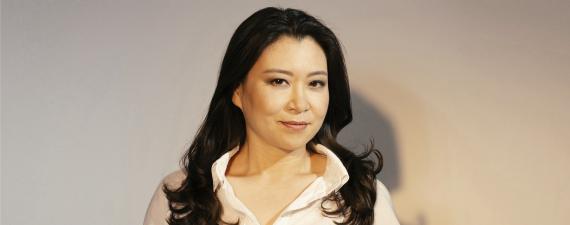
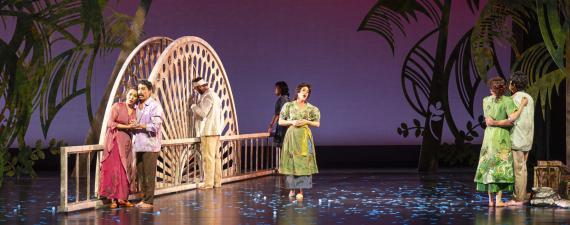
Over a decade after San Francisco Opera co-commissioned Stewart Wallace to compose his opera, Harvey Milk, Wallace returns with the premiere of another San Francisco-specific opera, The Bonesetter’s Daughter. Adopted from the novel by Amy Tan, the opera follows the women in a Chinese family over the course of three generations, from China to San Francisco. With gifted mezzo-soprano Zheng Cao singing the title role, we have much to look forward to.
Sept. 13 – Oct. 3, times vary, War Memorial Opera House, San Francisco, $20-$290, (415) 864-3330, www.sfopera.com. (J.V.S.)

Amy Tan
Western Wind, When Wilt Thou Blow?
Schola Cantorum San Francisco is one of the most consistently excellent professional choruses in the Bay Area, and that’s saying something. Their season begins at Old First Concerts, with a performance of John Taverner’s influential, beautiful Western Wind Mass, and other English polyphony from the reign of Henry VIII.
Sept. 20, 8 p.m., Old First Church, San Francisco, $12-$15, (415) 474-1608, www.oldfirstconcerts.org. (M.Z.)
Die Tote Stadt
The Dead City is one of Erich Korngold’s most gripping and richly melodic operas, written at age 23. The music is reminiscent of both Puccini and Richard Strauss. Strangely, it will have its premiere here only now, 88 long years after its great success in Europe. From the man who became one of Hollywood’s most successful film composers, this is a work reminiscent of Hitchcock’s Vertigo. The story is about a man (sung by Torsten Kerl) whose obsession with his dead wife (Emily Magee) places him in a world torn between painful reality and yearning fantasy. Willy Decker’s intriguing production arrives in San Francisco from the Vienna State Opera and the 2004 Salzburg Festival. Donald Runnicles conducts.
Sept. 23 and 26, 8 p.m.; Oct. 1, 7:30 p.m.; Oct. 4, 8 p.m.; Oct. 9, 7:30 p.m.; Oct. 12, 2 p.m., War Memorial Opera House, $15-$260, (415) 864-3330, www.sfopera.com. (J.G.)

Thorston Kerl (center), who will sing the role here
Romeo and Juliet, on Motifs of Shakespeare
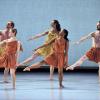
Choreographer Mark Morris returns to Berkeley with his latest evening-length work, Romeo and Juliet, on Motifs of Shakespeare. Morris is always interesting, but this event offers something more: an opportunity to hear one of the world’s beloved ballet scores as the composer intended it. With Romeo and Juliet, Prokofiev departed significantly from Shakespeare, conceiving an alternate ending in which the star-crossed lovers live. The Soviet regime intervened, and Prokofiev was forced to make major revisions; as a result, he never heard the original score during his lifetime. It was recently recovered from the Russian State Archive by Princeton musicologist Simon Morrison and was revived last month at Bard College, with Morris’ new choreography and Leon Botstein conducting the American Symphony Orchestra. Cal Performances presents the production’s West Coast premiere. The Mark Morris Dance Group is joined by the Berkeley Symphony Orchestra under Stefan Asbury in four performances at Zellerbach Hall.
Sept. 25-27, 8 p.m.; Sept. 28, 3 p.m., Zellerbach Hall, UC Berkeley campus, $42-$94, (510) 642-9988, www.calperformances.org. (G.R.)

Dancers in Mark Morris’ Romeo
Wondrous Free
Chanticleer, the celebrated men’s chorus, opens its local season with a festival of American song stretching from Francis Hopkinson’s “My Days Have Been So Wondrous Free” (1759), to a newly commissioned work by David Conte (also the director of the San Francisco Conservatory’s fine chorus).
Sept. 25, 8 p.m., First Congregational Church, Berkeley; Sept. 26-27, 8 p.m., Sept. 28, 5 p.m., San Francisco Conservatory of Music; $25-$44, (415) 252-8589, www.chanticleer.org. (M.Z.)
Garrick Ohlsson
One of the great interpreters brings his alternately vigorous and distinctively delicate touch on the keyboard to the South Bay in a solo recital program of early sonatas by Beethoven (the “Pathétique” and Op. 22) and by Scriabin (No. 2, the “Sonata-Fantasy”).
Sept. 28, 7 p.m., McAfee Center, Saratoga, ticket prices not yet available, (408) 295-6500, www.steinwaythebayarea.com. (D.B.)

Garrick Ohlsson
Eccentric Escher
The always interesting Escher Quartet, veterans of the two most recent Music@Menlo Festivals, bring their motoric rhythms and compressed interpretations to San José’s chamber music series. They’re eccentric but worth a listen. The varied repertoire includes Mozart, Zemlinsky, Shostakovich, and — to crown the concert — Beethoven’s Third “Razumovsky” Quartet.
Sept. 28, 7 p.m., Le Petit Trianon, San José, $25-$40, (408) 286-5111, www.sjchambermusic.org. (D.B.)

Escher String Quartet
Photo by Tristan Cook
October
Charpentier the Pleasure-Seeker
When Warren Stewart’s Magnificat performs their core 17th-century repertory, the appeal of this music becomes instantly obvious, and not a matter for specialists and hard-core fans. Expect the usual sparks to fly when the group takes up Marc-Antoine Charpentier’s divertissements Les Plaisirs de Versailles and La Couronne des fleurs. This is Charpentier in a vein you will have rarely encountered, and it should be a jewel of a concert.
Oct. 3, 8 p.m., First Lutheran Church, Palo Alto; Oct. 4, 8 p.m., St. Mark’s Episcopal Church, Berkeley; Oct. 5, 4 p.m., St. Mark’s Lutheran Church, San Francisco, $10-$30, (800)-853-8155, www.magnificatbaroque.org. (M.Z.)
Isabel Bayrakdarian Sings of Armenia
The visually and artistically spectacular soprano Isabel Bayrakdarian, accompanied by the Manitoba Chamber Orchestra, sings a concert that is not for the faint of heart. It centers on the celebration of a contemporary composer all but completely unknown in these parts. The composer in question is Gomidas Vartabed (1869-1935), the soprano’s fellow Armenian, the country’s national composer. Besides Vartabed’s Songs of Yearning, Songs of Nature of Love, and other works, the soprano will also sing works by Bartók, Ravel, Nikos Skalkottas, and Gideon Klein.
Oct. 4, 8 p.m., Herbst Theatre, $40-$65, (415) 392-2545, www.performances.org. (J.G.)

Isabel Bayrakdarian
Three-Legged Monster Symphony Concert
Those of you who love that black monster, the concert-grand piano, will get 45 minutes of it as Emmanuel Ax tackles not one but two of the greatest pieces ever written that are not called piano concertos. Peter Oundjian conducts the San Francisco Symphony in the “Concertante” Symphony No. 4 by Karol Szymanowski, a hit at the 2007 Festival del Sole, and Richard Strauss’ Burlesque, an inspiration for Bernstein’s tune There’s a place for us somewhere. Another great tune appears in Tchaikovsky’s Francesca da Rimini, also on the program. If you attend Oct. 10, you miss a Mozart overture but in its place you get an illustrated lecture on the rest of the music.
Oct. 9, 8 p.m., Oct. 10, 6:30 p.m., Oct. 11, 8 p.m., Davies Symphony Hall, San Francisco, $30-$130, (415) 864-6000, www.sfsymphony.org. (J.D.)

Emmanuel Ax
New Esterházy Quartet
A year after its launch, the New Esterházy Quartet’s Haydn cycle continues with five more programs this season. The first year’s happy mingling of the familiar and the almost unknown holds for the remaining programs, as well. The season-opening program, titled “Haydn at the Opera,” is typically enticing: four quartets, four magnificent slow movements with a decidedly operatic cast. Op. 20, No. 2, which has a honey of a cello part and an entire (wordless) operatic scena at its heart, is deservedly often played. But how many know that movement’s little sister in Op. 17/5, or the very different, but equally beguiling, violin arias in Opp. 1/2 and 33/6?
Oct. 11, 4 p.m., St. Mark’s Lutheran Church, San Francisco, $10-$25, mail@newesterhazy.org, www.newesterhazy.org. (M.D.T.)

New Esterházy Quartet
Kirov Classics
The Kirov Ballet is one of the world’s most famous dance institutions. The technical perfection of their corps de ballet is incredible, rivaled only by that of their Parisian comrades. And assuming that Diana Vishneva is not still nursing an injury that prevented her from strutting her stuff in an American Ballet Theater program earlier this year, the company will bring sufficient star power to make their appearance in Berkeley a must for balletomanes. They perform a program of excerpts from Russian 19th-century faves, including the “Kingdom of the Shades” scene from La Bayadère, and also the full-length comic ballet Don Quixote.
Oct. 14-15, 17-19, 8 p.m.; Oct. 18, 2 p.m.; Oct. 19, 3 p.m., Zellerbach Hall, Berkeley, $50-$125, (510) 642-9988, www.calperfs.berkeley.edu. (M.Z.)
Idomeneo, San Francisco Opera
Idomeneo may be the most brilliant opera you’ve never seen. Set on Crete in the aftermath of the Trojan War, Mozart’s 1781 opera seria has only been presented three times by San Francisco Opera — most recently, in 1999, with a cast that included Barbara Bonney as Ilia, Vesselina Kasarova as Idamante, and the late, great Gosta Winbergh in the title role. This fall, the company revives the opera for six performances starring today’s reigning Idomeneo, tenor Kurt Streit. The cast also features San Francisco Opera debuts by Genia Kuhmeier (Ilia) and Iano Tamar (Elettra); Alice Coote sings Idamante. Donald Runnicles conducts, and John Copley directs.
Oct. 15-31, War Memorial Opera House, San Francisco, $15-$290, (415) 864-3330, www.sfopera.com. (G.R.)
Emerson Quartet plays Shostakovich
There’s no more bleak and depressing music than late Shostakovich, yet somehow through the grimaces and pain it gives its listeners the strength to carry on. Here’s your chance to wallow in despair and come out with catharsis as the great Emerson Quartet plays Shostakovich’s last three string quartets, Nos. 13-15, all in one concert. Wear your most somber late-Soviet-era garb.
Oct. 15, 8 p.m., Dinkelspiel Auditorium, Stanford, $23-$52, (650) 725-2787, http://livelyarts.stanford.edu (D.B.)

Yuja Wang
Photo by Mitch Jenkins
BluePrint Project
Nicole Paiement’s ongoing BluePrint series opens this year with what is obviously (though not billed as such) a pre-election special: a program whose anchoring pieces react, in varying but similarly pain-fraught ways, to political events. On the program are the late Andrew Imbrie’s From Time to Time for 10 musicians (reflecting on the Japanese invasions of China and other nations before and during World War II); John Harbison’s Abu Ghraib; and Frederic Rzewski’s Coming Together, whose text (from a letter written by one of the leaders of the 1971 Attica prison uprising) will be declaimed by the brilliant violinist/vocalist Carla Kihlstedt. Pieces by Bright Sheng (Postcards, for chamber orchestra) and John Halle (Homage) complete a program that, in the typical Paiement manner, throws light on a difficult theme from many and unexpected angles.
Oct. 18, 8 p.m., Concert Hall, San Francisco Conservatory, $15-$20, (415)503-6275, www.sfcm.edu. (M.D.T.)

Nicole Paiement
Bach Family Frolic
J.S. Bach came from a long line of distinguished Thuringian church musicians, dating all the way back to the 16th century. Meet some of the elder Bachs, along with Dietrich Buxtehude and others in this concert exploring Johann Sebastianʼs musical heritage. Music of Johann Christoph, Johann Michael, and more — itʼs a full batch of Bachs. Erica Schuller is the soprano soloist and Katherine Growden brings her richly satisfying voice to the mezzo-soprano parts.
Oct. 18, 8 p.m., Oct. 19, 4 p.m., Calvary Presbyterian Church, San Francisco, $15-$28, (415) 441-4942, www.sfbach.org. (M.Z.)
Prized Pianism
Eighteen years after winning the Leeds Piano Competition, Warsaw-born Piotr Anderszewski continues to touch the heart with rare poetic nuance. His return to Cal Performances finds him performing music by two masters, Mozart and Bach.
Oct. 19, 5 p.m., Hertz Hall, UC Berkeley, $46, (510) 642-9988, www.calperformances.org. (J.V.S.)

Piotr Anderszewski
The Borel Script
Distinguished harpsichordist Davitt Moroney is also known for marvelous discovery, often unearthing long-lost manuscripts and putting on performances that can generate an unparalleled buzz in the international music world. In his October concert, put on by MusicSources, he gives the West Coast premiere of newly discovered French works in the Borel Script (c. 1660), a significant keyboard manuscript recently acquired by the Hargrove Music Library at UC Berkeley. You may know Moroney for his exceptional keyboard skills, or as one of the foremost interpreters of Byrd (he won a Gramophone Award in 2000 for his recording of the complete keyboard works), but what can be most exciting about the musicologist/musician is everything you don’t know, showcased in the little-known repertoire that he brings to light.
Oct. 19, 5 p.m., St. Mary Magdalen Church, Berkeley, $25-$30, (510) 528-1685, www.musicsources.org. (C.G.)

Davitt Moroney
Hen in the Foxhouse
See what happens when the Berkeley Symphony, noted for cheering on the academic-rich audience with atonal premieres, allows William Eddins, a candidate for the position of music director, to conduct and be soloist in Alan Gilliland’s new pastiche, Dreaming of the Masters II: Rhapsody GEB. The GEB stands for Gershwin, Ellington, and Bernstein; the style is cocktail-lounge relaxing; and the beginning of the program, consisting of short French baubles, will kill ‘em with kindness. Bohuslav Martinů’s Symphony No. 1 after intermission will sound like Karlheinz Stockhausen by comparison, if any professors are alive to hear it.
Oct. 23, 8 p.m., Zellerbach Hall, UC Berkeley, $20-$60, (510) 841-2800, www.berkeleysymphony.org. (J.D.)

William Eddins
Paean to the Lost
A huge gap will be filled when a masterpiece by the vastly underrated Franz Schmidt (1874-1939) is performed for the first time by the San Francisco Symphony, conducted by Fabio Luisi. Schmidt, a former cellist in the Vienna Court Opera Orchestra under Mahler, wrote his Fourth Symphony in 1934, in honor of his only daughter, who had died in childbirth two years previously. In the symphony’s spare motto theme, tight-knit yet expansive structure, and gorgeous cello melody that dominates the second movement, you can hear the composer’s longing for Old Vienna, as well as his daughter. Violinist Joshua Bell will also be there to play Ravel and Saint-Saëns.
Oct. 23, 24, 25, 8 p.m., Davies Symphony Hall, San Francisco, $30-$130, (415) 864-6000, www.sfsymphony.org. (J.D.)
At Home in the Security State
Performance artist and composer Laurie Anderson brings her most ambitious work ever, Homeland, to Cal Performances. As usual, the piece mixes song and story with vocal processing and visual art, and addresses contemporary politics, following the model of her previous pieces, United States I-IV. Don’t forget about the live interview with Anderson on Saturday, Oct. 25, at 2 p.m., at Wheeler Auditorium, on the UC Berkeley campus.
Oct. 24-25, 8 p.m., Zellerbach Hall, Berkeley, $28-$56, (510) 642-9988, www.calperfs.berkeley.edu. (M.Z.)

Laurie Anderson
Jerusalem Symphony Orchestra
Leon Botstein, long known as a champion of contemporary music, brings the Jerusalem Symphony to Cal Performances to perform 20th-century works, some more familiar than others. With the superb violinist Robert McDuffie in tow, Botstein conducts Miklós Rózsa’s not-heard-enough Violin Concerto. Also on the program are Ernst Toch’s Big Ben Variations and Copland’s Symphony No. 3. The latter will, audiences may hope, end with an uncommon performance of the much-beloved Fanfare for the Common Man.
Oct. 26, 7 p.m., Zellerbach Hall, UC Berkeley, $46, (510) 642-9988, www.calperformances.org. (J.V.S.)

Leon Botstein
The Elixir of Love
The simplest and most enchanting of love stories, with Donizetti’s irresistible music, and a brilliant cast, including Inva Mula (the seven-foot-tall “blue diva” of The Fifth Element) as Adina, Ramón Vargas as Nemorino, and the San Francisco debuts of Giorgio Caoduro (Belcore) and Alessandro Corbelli (Dulcamara). Bruno Campanella conducts, James Robinson is stage director. The opera is 2 1/2 hours long, but a “family edition” presents a 2-hour version, with recent Adler Fellows in the principal roles, and reduced admission.
Oct. 29, 7:30 p.m.; Nov. 1, 8 p.m.; Nov. 5, 7:30 p.m.; Nov. 9, 2 p.m.; Nov. 14 and 18, 8 p.m.; Nov. 23, 2 p.m.; Nov. 26. 7:30 p.m. For families: Nov. 8 and 15, 12:30 p.m., War Memorial Opera House, $15-$260, (family performances: $20-$80), (415) 864-3330, www.sfopera.com. (J.G.)

Inva Mula
Musica Pacifca
Early Music mavens — Judith Linsenberg, recorder; Elizabeth Blumenstock, violin; David Morris, cello, viola da gamba; Charles Sherman, harpsichord — set their sights on entertainment with pieces that are inspired by Playford’s collections, “The Division Violin” and “The Division Flute.” Spicier sonatas by Matteis, as well as more somber ones from Purcell and his Italian contemporaries, share the program with fresh improvisations and a gamba fantasias. Guests include Robert Mealy, violin, and Peter Maund, percussion.
Oct. 31, 8 p.m., First Lutheran Church, Palo Alto; Nov. 1, 7:30 p.m., St. John’s Presbyterian Church, Berkeley; Nov. 2, 4 p.m., St. Mark’s Lutheran Church, San Francisco, $22-$25, (510) 528-1725, www.sfems.org. (C.G.)
The Phantom of the Opera
The iconic Lon Chaney silent film from 1925, the first of a myriad Phantoms of the Opera, will be screened in Davies Symphony Hall, as Dennis James provides musical accompaniment on Davies’ 9,000-pipe Ruffatti organ, the largest such instrument in North America. Chaney followed up on the great success of his previous monster movie, The Hunchback of the Notre Dame, made just two years before.
Oct. 31, 8 p.m., Davies Symphony Hall, $25-$55, (415) 864-6000, www.sfsymphony.org. (J.G.)

The Ruffatti Organ
November
Paris Piano Trio Debut
There are few better ways to spend your Sunday than in a mansion listening to great music. Three former prize-winning students at the Paris Conservatoire turned distinguished professors — Régis Pasquier (violin), Roland Pidoux (cello), and Jean-Claude Pennetier (piano) — make their debut at the Kohl Mansion. Their solo careers are impressive enough, but their rapport together should be something to enjoy. The program: Fauré’s Piano Trio in D Minor, Op. 120; Schumann’s Piano Trio in G Minor, Op. 110, and Mendelssohn’s Piano Trio in D Minor, Op. 49.
Nov. 2, 7 p.m., Kohl Mansion, Burlingame, $20-$42, (650) 762-1130, www.musicatkohl.org. (C.G.)
Dance Inventor
The prodigiously creative dancer/choreographer Merce Cunningham has lived long enough to see dance history written around him. In November, he brings his company back to Berkeley, a tour stop for half a century now. The programs include some of his iconic works with John Cage, including 1958’s Suite for Five, as well as some newer works such as eyeSpace (2006-2007), and Split Sides (2003), to music by Radiohead and Sigur Ros.
Nov. 7-8, 8 p.m.; Nov. 14-15, 8 p.m.; Zellerbach Hall, Berkeley, $26-$48, (510) 642-9988, www.calperfs.berkeley.edu. (M.Z.)
Santa Rosa Symphony
Under Jeffrey Kahane, the Santa Rosa Symphony’s programming set a standard that most of the Bay Area’s regional orchestras didn’t really try to match — enterprising, thoughtful, offbeat, and graced moreover with an unusually interesting roster of guest artists. Those of us who wondered initially whether Bruno Ferrandis — now beginning his third season as Kahane’s successor — would follow his predecessor’s lead can now answer the question heartily in the affirmative. Santa Rosa’s 2008-2009 season is full of goodies, from Haydn’s “Lord Nelson” Mass to Carl Maria von Weber’s piano-and-orchestra Konzertstück to Nikolai Miaskovsky’s Cello Concerto to three movements of Olivier Messiaen’s Turangalîla-symphonie. The November set opens with a double whammy. First there’s György Ligeti’s 1967 Lontano, a wondrously intricate, glacially shifting study in orchestral color; then Gilles Apap in Alban Berg’s Violin Concerto. (Lovers of the Berg will, naturally, be looking forward to Gil Shaham’s return visit with the piece to the San Francisco Symphony next spring, but Apap — a sort of panstylistic violinist possibly better known as a fiddler than as a classical musician — has the kind of hyperinflected violinistic voice that would be fascinating to hear in this music.) It’s a heady combination, leavened (at “heavenly length”) by Schubert’s Ninth Symphony.
Nov. 8, 8 p.m. (also Nov. 9, 3 p.m.; Nov. 10, 8 p.m.), Wells Fargo Center, Santa Rosa, $27-$50, (707) 546-8742, www.santarosasymphony.org. (M.D.T.)

Bruno Ferrandis
Anthony Marwood & Thomas Adès
To the extent that American audiences know violinist Anthony Marwood at all, it’s likely as a member of a number of busy British chamber ensembles (foremost among them the Florestan Trio), with whom he has recorded all sorts of mostly 19th-century repertoire staples. Adès, meanwhile, is far better known as a composer than as a pianist. But those who have heard Adès at the keyboard on his previous visits to the Bay Area still talk about the experience, and Marwood, for whom Adès wrote his 2005 violin concerto Concentric Paths, turns out to be as comfortable well away from German Romanticism as in it. The duo’s program — Stravinsky’s violin-and-piano music, nearly all of it adapted by the composer from his own earlier works at the behest of violinist Samuel Dushkin — might seem a limiting one. Actually, there’s plenty of variety in there, from the Baroque and Tchaikovskian sources of the Suite italienne (after Pulcinella) and the Divertimento (after Le Baiser de la fée) respectively, to the sinuous, early Pastorale (originally a vocalise), to the astringent Duo concertant of 1932.
Nov. 8, 7 p.m., Herbst Theatre, San Francisco, $32-$49, (415) 392-2545, www.performances.org. (M.D.T.)
The Messiaen Centenary
Olivier Messiaen’s centenary is in December, and Stanford Lively Arts celebrates the visionary composer in style. Scott St. John, violin, and Christopher Costanza, cello, both from the St. Lawrence String Quartet, are joined by clarinetist Todd Palmer and pianist Jamie Parker for Messiaen’s Quartet for the End of Time. Written while the composer was a prisoner of war during World War II and a product of Messiaen’s Catholic mysticism, the Quartet is a seminal 20th-century chamber work. Robert Huw Morgan rounds out the program with a selection of organ works, Messiaen’s own instrument.
Nov. 13, 8 p.m., Memorial Church, Stanford University, $22-$44, (650) 723-2551, http://livelyarts.stanford.edu (L.H.)

St. Lawrence Quartet
Philharmonia Baroque Orchestra
“Haydn, Mozart, Beethoven” may sound like a chapter heading in a music-history text, but in the context of a Philharmonia Baroque program with Nicholas McGegan at the helm, it’s a recipe for a fine two-hour romp. The centerpiece is the Beethoven “Triple” Concerto, which is one piece that the historical-performance movement — ordinarily gung-ho to tackle Beethoven — has given suspiciously scant attention. Can the ridiculously difficult solo cello part have anything to do with that? Tanya Tomkins tackles the beast here, with Colin Jacobsen on violin and Eric Zivian, better known in his modern-pianist guise, on fortepiano as co-soloists. Mozart (the “Haffner”) and Haydn (No. 88) symphonies round out the program.
Nov. 13, 8 p.m., Herbst Theatre, San Francisco; Nov. 14, 8 p.m., First United Methodist Church, Palo Alto; Nov. 15, 8 p.m., Nov. 16, 7:30 p.m., First Congregational Church, Berkeley; $30-$75, (415) 252-1288, www.philharmonia.org. (M.D.T.)
Piano Fever
Concerts Grand, the North Bay’s only piano recital series, curated by SFCV’s own Terry McNeill, charges into another season, with the local debut recital of Russian Elena Ulyanova. The program is full of big pieces, from Beethoven’s “Appassionata Sonata,” and Chopin’s Andante spianato and Grand polonaise brillante, to Rachmaninov’s Sonata No. 2 in B-flat, Op. 36.
Nov. 14, 7 p.m., St. Hilary’s Church, Tiburon, $25-$50, (707) 526-2447, www.concertsgrand.com. (M.Z.)

Elena Ulyanova
Crazy in Love, and Just Plain Crazy
Two people coming together is celebrated by Michael Morgan and the Oakland East Bay Symphony, with a new piece by Nathaniel Stookey dubbed “a breathless affair for two singers and orchestra,” and Prokofiev’s Romeo and Juliet suites. The Stookey work, Zipperz, will incorporate the zippered-poetry form pioneered by librettist Dan Harder (see www.danharder.com for an example). The concert begins with a 12-minute funhouse of jokes by the “bad-boy of music,” George Antheil — his Jazz Symphony.
Nov. 14, 8 p.m., Paramount Theater, Oakland, $20-$65, (510) 444-0801, www.oebs.org. (J.D.)
Symphony of a Thousand
That title for this 1910 Mahler symphony is usually a bit of an exaggeration, but this is an enormous work, in length, breadth, ambition, majesty … and the number of performers. The text includes medieval Latin hymns and the hour-long closing scene of Goethe’s Faust. Michael Tilson Thomas conducts a full orchestra, offstage instruments, three choruses, and eight soloists, including Laura Claycomb, Anthony Dean Griffey, and James Morris.
Nov. 19, 21, 22, 8 p.m.; Nov. 23, 4 p.m., Davies Symphony Hall, $35-$65, (415) 864-6000, www.sfsymphony.org. (J.G.)
Guarneri Farewell
After 45 years, the fabled Guarneri String Quartet bids farewell, not with tears, but by embracing the new. In the company of the young Johannes String Quartet, their San Francisco Performances program balances the time-honored beauty of Mendelssohn’s Octet with the Bay Area premiere of William Bolcom’s Octet: Double Quartet. Two additional Bay Area premieres, quartets by Esa-Pekka Salonen and Derek Bermel, make for a night of rejoicing and promise.
Nov. 20, 8 p.m., Herbst Theatre, San Francisco, $32-49, (415) 392-2545, www.performances.org. (J.V.S.)

Guarneri String Quartet
Toreador Revived
Ballet San Jose brings an unusual and rarely performed full-length work to the stage in November, The Toreador, choreographed by Flemming Flindt, after the renowned 19th-century master of the Royal Danish Ballet, August Bournonville. Symphony Silicon Valley, under the baton of Dwight Oltman, will breathe life into the score. The costumes and scenery come straight from Denmark’s Royal Opera House.
Nov. 20-22, 8 p.m.; Nov. 23, 1:30 p.m., San Jose Center for the Performing Arts, $25-$85, (408) 288-2820, www.balletsanjose.org. (M.Z.)
Redwood Symphony Plays Jewish Music
The Redwood Symphony continues its quest for interesting programming with a concert of Jewish-themed (mostly) music by contemporary Jewish composers, performed in one of the Bay Area’s most beautiful contemporary-styled synagogues. How cool is that? The program includes the klezmer-inspired Dreams and Prayers of Isaac the Blind by Osvaldo Golijov and Steve Reich’s amazing psalms setting Tehillim, as well as works by Philip Glass and Lukas Foss. Music director Eric Kujawsky conducts.
Nov. 23, 3 p.m., Congregation Beth Am, Los Altos Hills, $10-$25, (650) 366-6872, www.redwoodsymphony.org (D.B.)

Eric Kujawsky
Kafka Fragments
Dawn Upshaw, soprano, MacArthur Fellow, majestic champion of new music, and Geoff Nuttall, first violinist of the St. Lawrence String Quartet, bring to Cal Performances an acclaimed production of György Kurtág’s Kafka Fragments. Under the direction of Peter Sellars, the two have performed the piece several times since 2005, when the staging was created for the Perspective series that Upshaw curated at Carnegie Hall. Kurtág sets excerpts from Kafka’s diaries, letters, and notebooks. In a 2005 interview with Jeremy Eichler, then of The New York Times, Upshaw said that on first hearing Kafka Fragments she was devastated by it and thought she was not up to singing it; Nuttall termed the violin part “borderline unplayable.” Nevertheless, despite the daunting musical and dramatic challenges of the piece, Upshaw and Nuttall have been acclaimed in previous performances, and this promises to be one of the highlights of the fall season.
Nov. 23, 7 p.m., Nov. 24, 8 p.m., Zellerbach Playhouse, Berkeley, $68, (510) 642-9988, www.performances.org. (L.H.)
December
Venetian Christmas
Every year, as December rolls around, I wonder who will create the most original or interesting seasonally themed concert. This year’s list of finalists includes the California Bach Society, presenting a full program of 16th- and 17th-century choral music from Venice’s St. Mark’s Cathedral. The bold and brilliant music on this program, including Monteverdi’s four-voice Magnificat from 1640, is chock full of beautiful and (at the time) innovative ideas, including the famed “cori spezzati” (divided chorus) effect. You just hope Cal Bach can re-create that effect in humbler quarters than the Venetian cathedral.
Dec. 5, 8 p.m., St. Gregory of Nyssa Episcopal Church, San Francisco; Dec. 6, 8 p.m., All Saints’ Episcopal Church, Palo Alto; Dec. 7, 4 p.m., St. Mark’s Episcopal Church, Berkeley, $10-$25, (415) 262-0272, www.calbach.org. (M.Z.)
Aurific Atonality
There is no way around it: Atonal music is the signal contribution to Western music from the 20th century. And what better way to learn why Elliott Carter is the most universally respected exponent of the style than to hear the Master Music Explainer, Bob Greenberg, run through Carter’s five string quartets on one day, and all the piano music the next. The works are performed on the respective evenings by the Pacifica Quartet and Ursula Oppens.
Dec. 6, lectures 10 a.m. to 5 p.m., string quartets 7 p.m.; Dec 7, lecture 2 p.m., piano music 4 p.m.; Yerba Buena Center for the Arts Forum, San Francisco, $95 (see Web site for separate-event charges), (415) 392-2545, www.performances.org. (J.D.)

Pacifica Quartet
Mozart and Tchaikovsky at Symphony Silicon Valley
Symphony Silicon Valley has dropped the “Behind the Score” lecture-demo it originally scheduled on Tchaikovsky’s Fourth Symphony, but kept the work. In the lecture’s place it has agreeably substituted the Mozart Clarinet Concerto with the band’s own excellent principal, Michael Corner, as soloist, with a Suppé overture for openers. The Mozart alone should make it worthwhile to attend this concert, conducted by frequent guest Paul Polivnick.
Dec. 6, 8 p.m., Dec. 7, 2:30 p.m., California Theatre, San José, $37-$73, (408) 286-2600, www.symphonysiliconvalley.org. (D.B.)

Michael Corner
With Guests Like These
There are a lot of holiday concerts to pick from, but the New Century Chamber Orchestra offers one that is hard to pass up, with special guests soprano Melody Moore (an Adler Fellow with a glowing track record at the S.F. Opera) and Schola Cantorum (the church choir without a church, celebrated for its refinement and expert musical ensemble). The program includes Brandenburg concertos by Bach and Handel’s Solomon, Overture and Entrance of the Queen of Sheba.
Dec. 11, 8 p.m., St. John’s Presbyterian Church, Berkeley; Dec. 12, 8 p.m., First United Methodist, Palo Alto; Dec. 13, 8 p.m., Herbst Theatre, San Francisco; Dec. 14, 5 p.m., Osher Marin Jewish Community Center; $32-$54; (415) 357-1111, www.ncco.org. (C.G.)

Members of the New Century Chamber Orchestra
Heggie and Flicka’s Autumnal Love Fest
In one of her farewells to the operatic stage, the great mezzo-soprano Frederica von Stade teams up with composer Jake Heggie for the West Coast premiere of the chamber opera he wrote for her, Three Decembers. Based on a play by Terrence McNally, the work merges operatic and Broadway idioms to tell the tale of the challenging relationship of an actress with her two grown children. In a story that will have immediate resonance to many, one of her sons is a gay man whose partner is dying of AIDS. This special coproduction with Houston Grand Opera and Cal Performances features a 10-piece instrumental ensemble that includes Heggie and conductor Patrick Summers on piano.
Dec. 11-14, times vary, Zellerbach Auditorium, UC Berkeley, $48-$86, (415) 864-3330, www.sfopera.com. (J.V.S.)
Twelfth Night
Jonathan Dimmock directs the Artists’ Vocal Ensemble in this program of both sacred and secular music, exploring the relationship between the religious holidays and the New Year — the Saints’ Days between Christmas and Epiphany at the heart of the religious calendar of Europe — as found in the great tradition of Renaissance choral music.
Dec. 12, 8 p.m., First Lutheran Church, Palo Alto; Dec. 13, 7:30 p.m., First Congregational Church, Berkeley; Dec. 14, 4 p.m., St. Mark’s Lutheran Church, San Francisco; $22-$25, (510) 528-1725, www.sfems.org. (C.G.)
Symphony Friends
Friends from the San Francisco Symphony — Geraldine Walther, viola; Amy Hiraga and Sarn Oliver, violins; Nancy Ellis, viola; Peter Wyrick, cello; and Robin Sutherland, piano — get together for a special holiday benefit concert (and the special holiday buffet that follows). Two quintets, Mozart’s String Quintet No. 3 and Brahms’ Piano Quintet in F Minor, share the program with Frank Bridge’s Two Pieces for Viola and Piano, a chamber piece that demonstrates the technique the composer passed along to his student Benjamin Britten.
Dec. 14, 7 p.m., Kohl Mansion, Burlingame, $85 each ($65 for season subscribers), (650) 762-1130, www.musicatkohl.org. (C.G.)
David Bratman is a librarian who lives with his lawfully wedded soprano and a wall full of symphony recordings.
Jeff Dunn (jdunnpm@yahoo.com) is a freelance critic with a B.A. in music and a Ph.D. in geologic education. A composer of piano and vocal music, he is a member of NACUSA and president of Composers Inc.
Janos Gereben (janosg@gmail.com) is a regular contributor to San Francisco Classical Voice.
Catherine Getches is managing editor of San Francisco Classical Voice. Her writing has appeared in publications such as The Washington Post, San Francisco Chronicle, Los Angeles Times, Salon.
Lisa Hirsch is a technical writer. She studied music at Brandeis and SUNY/Stony Brook.
Georgia Rowe is a Bay Area arts writer. Her work has appeared in Opera News, Gramophone, The San Jose Mercury News, The Oakland Tribune, The San Francisco Examiner, and The Contra Costa Times.
Jason Victor Serinus writes about music for such publications as Opera News, American Record Guide, Stereophile, San Francisco Magazine, Muso, East Bay Express, San Francisco Examiner and Bay Area Reporter.
Michelle Dulak Thomson is a violinist and violist who has written about music for Strings, Stagebill, Early Music America, and The New York Times.
Michael Zwiebach holds a Ph.D. in music history from UC Berkeley.
©2008 By David Bratman, Jeff Dunn, Janos Gereben, Catherine Getches, Lisa Hirsch, Georgia Rowe, Jason Victor Serinus, Michelle Dulak Thomson, Michael Zwiebach, all rights reserved.
Bookmark this article at: http://www.sfcv.org/2008/08/26/the-season-ahead-3/
Join Our E-mail List
Sign up for or change your subscription to SFCV’s e-mail newsletters: The Week in Classical Music and Listening Ahead.
Reviews
choral music
Reaching for the Godhead
San Francisco Lyric Chorus stumbles on the stairway to heaven, in a program heavy with Te Deums.
opera
The Demon Barber of Fremont
The newish Fremont Opera pulls off a fresh, vital semistaged production of Rossini's madcap Barber of Seville.
contemporary music
‘Wordless’ Speaks of Talent, Opens Doors
New York's Wordless Music Series goes west, young man, with a riotously good fusion concert by local players.
Music News
- Venues, Cont'd
-
Todorov to Direct SFSU Music Program - Adams' Sonic Youth
-
Gergiev in Georgia, Misusing Shostakovich - More on Supertitle Anniversary
Music News
Around the WorldPowered by ArtsJournal
- Bayreuth Succession, Chapter 8,396 8/27/2008 8:40 AM
- Edinburgh And Salzburg - A Tale Of Two Festivals 8/27/2008 7:25 AM
- Gerard Mortier Wants To Run Both NYC Opera And Bayreuth 8/26/2008 7:35 PM
- Meet The Music Video 2.0 8/26/2008 7:34 PM
- BMI Posts Record Revenues, Payments To Musicians 8/26/2008 7:26 PM
Absolutely do not miss the SFO production of Korngold’s Die tote Stadt. I saw this production in Vienna in 2004 and was absolutely blown away. You will leave the theater thinking, “How did they *do* that??” The music is beautiful, the cast outstanding, and this rare gem is presented in a production which will boggle the mind.
Posted by Ruth C. Jacobs on August 27, 2008 at 1:03 am