Be'eri Moalem

Be'eri Moalem (www.beeri.org) is a violist, teacher, writer, and composer.

Articles by this Author

Singing Strings From the Cypress - Review
February 6, 2012

Cypress String QuartetOne look at the Cypress String Quartet program, and I couldn’t pass it up: Ravel’s incomparable Quartet in F, Erwin Schulhoff’s fierce little Five Pieces for String Quartet, and one of Cypress’ early Call & Response commissions: Jennifer Higdon’s Impressions, written as a response to Ravel’s quartet.

Brentano: Echoes of Past, Hints at Future - Review
December 6, 2011

There is a graphic going viral on Facebook among classical music lovers. It states that the top 1 percent of classical composers (Bach, Mozart, Beethoven, Brahms, and cohorts) are performed on 99 percent of concert programs. It urges composers to “#occupy new music.”

BluePrint Builds a Castle to Hersant - Review
November 21, 2011

Philippe HersantPhilippe Hersant was possibly the luckiest composer in the world Saturday night. In the season opener of the San Francisco Conservatory of Music’s BluePrint series, the 63-year-old French composer was treated to a two-hour concert of his own music by an all-star lineup of San Francisco’s best string players plus a deft ensemble of their students.

Joshua Bell: Master of the Bow - Review
November 12, 2011

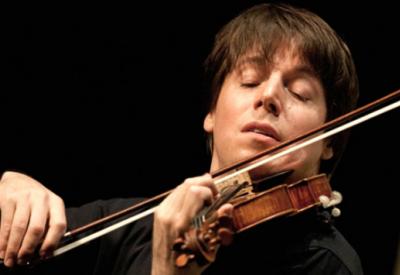
Joshua BellIn his second of three "Project San Francisco" appearances this year, Joshua Bell gave a recital this Thursday at Davies Symphony Hall. The program consisted of mostly general repertoire works — pieces that are heard over and over at conservatories around the world: Beethoven's C Minor Violin Sonata, Eugène Ysaÿe's D Minor solo Sonata, and César Franck's A Major Violin Sonata.

Dark Side of Steve Reich - Review
October 11, 2011

The music of Steve Reich and the Kronos Quartet, played at Sunday’s Cal Performances concert in Hertz Hall, helped me understand a verse from Psalm 92 in a new way:

Through Glass: Building a Legacy in Big Sur - Review
September 5, 2011

At intermission of the second to last concert in Philip Glass’ Days and Nights Festival last Friday, a throng formed around the music stands, with patrons apparently literate in music examining the notation; lines and lines of ceaseless mind-blurring notes notated pitch by pitch, rhythm by rhythm — an unending stream of notes. How does the eye follow without getting lost? How do the fingers stay strong and steady for such lengths of time with no break? How does the brain maintain its focus?

Play It Again, Philip Glass - Review
August 22, 2011

Philip GlassGertrude Stein once remarked, “There is no such thing as repetition. Only insistence.” When Philip Glass plays his own music, as he did on opening night of the inaugural season of the Philip Glass Days and Nights Festival, this insight rings true. For decades now, Glass has been repeating the same chord progression with the same style of melodic patterns.

Redshift: Cry of the Wild - Review
July 2, 2011

Tucked between the teal-painted Highway 101 skyway and the bizarre former Armory in the no-man’s land between the Mission District and Civic Center is the Brick and Mortar Music Hall. Formerly known as the CODA Jazz Supper Club (which recently went out of business), the venue hosts a variety of independent bands and strikes a typically “Mission” balance between grungy underground and swanky style.

New Century Orchestra Makes Dazzling, Unified Impression - Review
May 20, 2011

Of all the orchestras that regularly make the Bay Area concert circuit, one chamber orchestra truly plays at a higher level than the rest. The New Century Chamber Orchestra has always been one of the area's better ensembles, but under the direction of Nadja Salerno-Sonnenberg, NCCO leaves others in the shade. Each section of the all-string orchestra plays with unity of body movement, breath, and bow control. The effect of their current concert set is jaw-dropping. And it's not necessarily tied to the pieces they played

Cape Cod Comes to San José - Review
May 16, 2011

Pianist Jon Nakamatsu and clarinetist Jon Manasse joined Symphony Silicon Valley, under the baton of Leslie B. Dunner, to premiere Paquito d’Rivera’s Cape Cod Concerto this weekend at the California Theatre in San José. The new work is special in many ways, displaying layers of complexity, emotional depth, and outright fun.

Softly It Goes at the Marin Symphony - Review
May 5, 2011

The Marin Symphony ended its 74th season Tuesday at the Marin Center in San Rafael with a grand concert that included two old masterpieces and a new composition by Juilliard Composition Professor Behzad Ranjbaran. Commissioned as part of the Magnum Opus series, in conjunction with the Santa Rosa and Oakland East Bay symphonies, Ranjbaran’s Mithra depicts the ancient Persian god of the sun. The main protagonist is voiced by the flute (played here in a compelling rendition by Linda Lukas), in a meandering line out of the peaceful desert mountains.

From Israel, With Brio - Review
March 1, 2011

Israeli Philharmonic Orchestra conductoer Zubin MehtaWhat other touring orchestra posts its country's flag on stage when performing internationally? Israel's nationalistic pride is well known, and the Israel Philharmonic Orchestra (IPO) is a particularly special source of honor for Israelis.

Oakland Symphony’s Heavenly Brahms Requiem - Review
January 31, 2011

Michael Morgan and the Oakland Symphony and Chorus blessed concertgoers at the Paramount Theater on Thursday with a taste of heaven — an earnest and wonderfully played performance of Brahms’German Requiem.

Christian Tetzlaff Stands and Delivers - Review
December 6, 2010

The stage at Zellerbach Hall on the UC Berkeley campus is large enough to fit a full orchestra. But on Saturday night, one man stood alone on the stage with his violin, dressed in black, lit by a spotlight against a solid dark backdrop. No piano accompaniment or even a music stand — the solitary Christian Tetzlaff, playing the complete Sonatas and Partitas by J.S. Bach in a recital presented by Cal Performances.

Amped-Up Colors of the Del Sol - Review
November 17, 2010

The Del Sol Quartet is one of several organizations in the Bay Area that specialize in new music. The last time I heard the quartet, it played an all-acoustic concert, but this time around, perhaps taking after the Kronos Quartet, the entire performance was electrified.

Kronos Remembers 9/11 - Review
October 15, 2010

When planning programs for classical concerts there are two basic approaches: variety show (something classical, something Romantic, something “modern”, usually in chronological order), or themed concerts (e.g. all-Beethoven concert, all-Russian concert, Gypsy-inspired music, etc.). Order and balance on the program is crucial, setting the dynamic arch of the entire concert; choosing and ordering pieces is a form of musical composition

Takács Quartet Plays a Haydnesque Bartók - Review
October 11, 2010

Never have I understood the term “Papa Haydn” more clearly than I did at the Takács Quartet concert Saturday at Herbst Theatre, presented by San Francisco Performances. To open a string quartet concert with Haydn and close it with late Beethoven [Op. 127 in this case] is standard procedure.

Ear Exploration, Life Celebration - Review
June 23, 2010

For a society of iPod shufflin’, Web surfin’, channel flippin’, Facebook friendin’ individuals, the annual Garden of Memory is an excellent idea.

Repeat Counts as Pleasure - Review
March 15, 2010

One of my favorite composition teachers once said, “Any buffoon can get a premiere. A real achievement is a repeat performance.”

Last May, I reviewed the Ives Quartet’s premiere of Dan Becker’s work Time Rising. At the time, I was intrigued by its unusual macro structure: three tiny movements — or “ingredients” — followed by a much longer movement: the final product. Hearing the Ives play the work again on Sunday, I knew what to expect, and this time I was struck by its rhythmic complexity and the slowly moving harmony — each first presented as ingredients, then folded into the final piece.

Spelunking in Music’s Caves - Review
February 11, 2010

Schumann’s Piano Trio, Op. 110 in G minor, has thousands of notes, if not tens of thousands. The same goes for Chopin’s Piano Trio, Op. 8 in G minor, and Brahms’ Piano Trio No. 2 in C Major, Op. 87. So many classical musicians are intent on bringing out every single written note that it’s a relief to hear an ensemble that knows exactly when to highlight a gesture and when to recede into the background texture. This, Trio Cavatina knows how to do.