Michael Zwiebach
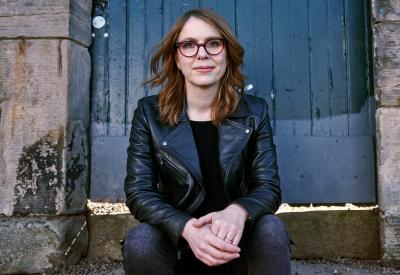
Michael Zwiebach is the senior editor/ content manager for SFCV. He assigns all articles and content, manages the writing staff and does editing. A member of SFCV from the beginning, Michael holds a Ph.D. in music history from the University of California, Berkeley.

Electronic keyboards have a wide range of uses. They are portable, they can be hooked up, via an industry-standard MIDI (musical instrument digital interface) to a computer for composition, recording, and signal-processing. They can synthesize sounds, and have lots of bells and whistles. Some even come with learning software that includes graded lessons. Prices for keyboards range from $200 to about $3,700 for one that’s top of the line.
Consider the needs of the person(s) playing the piano in your house, but you should also think long term. A good upright piano in average household conditions will last 40-50 years before needing a major overhaul, but many have lasted longer. So you want to buy a piano that is a little better than you think you deserve. Because they live in your house, pianos are like furniture so the look of the cabinetry or case is important to most buyers.
“I don’t know that I’ve ever done anything like this,” said Jon Nakamatsu. The pianist is the first soloist to be featured in Symphony Silicon Valley’s new “concital” series, which mixes together a recital and an orchestra concert. Nakamatsu is scheduled to perform with the Symphony on December 2–4.
Thank goodness for the chamber music societies that fill up the calendar with intriguing music for not much money. In November, the Mill Valley Chamber Music Society presents Concertante, a well-established string ensemble that last year finished an impressive two-year commissioning project that included such composers as Lowell Lieberman, Gabriela Lena Frank, Shulamit Ran, Kevin Puts, Tigran Mansourian, and Richard Danielpour.
A few months ago, in an
West Edge Opera (formerly Berkeley Opera) has boldness in its name, a boldness it has earned with productions that rethink operas, from the score to the stage. Now, Artistic Director Mark Streshinsky has upped the casting level, as well, making it a comparable strength and the company’s most notable aspect.
The men's choir Clerestory, originally a splinter group from Chanticleer, is one of the less-known Bay Area treasures. SFCV has been following it for a few years and the reviews have been uniformly excellent.
My SFCV colleague Matt Cmiel is also an enterprising composer who, while still a teenager, founded a new-music ensemble called Formerly Known as Classical. Its latest incarnation is the After Everything Ensemble.
The San Francisco Friends of Chamber Music provide a nice classical chamber series at the Legion of Honor, but their signature event has quickly become Chamber Music Day at the de Young Museum. It's seven hours of performance, discussion, discovery, wandering about, and meeting people.
Most of us grew up calling the Mariinsky Theater in St. Petersburg “the Kirov” in “Leningrad.” Reverting to the pre-Communist name may have confused some folks, but no matter. It remains one of Russia’s premier performing arts organizations under its charismatic leader, Valery Gergiev.
Composer Steve Reich turns 75 this year and keeps on rolling. And the 38-year-old Kronos Quartet keeps going with him. Their latest collaboration, Reich's memorial piece WTC 9/11, intentionally recalls the musical processes of Reich's masterpiece, Different Trains, also written for Kronos.
This weekend the Ives Quartet is playing a quintet, the Brahms F-Minor Piano Quintet to be exact. But what's really exciting is that pianist Gwendolyn Mok is going to play (as she played Ravel last year), on her 19th-century piano, an Erard, the Paris firm that was one of the most highly regarded instrument makers in Europe. 

At the Napa Symphony season opener this week, the sister act Christina and Michelle Naughton play a pair of duo piano concertos, one by Mozart and one by Poulenc. Meanwhile the orchestra opens with music by the “Spanish Mozart,” Juan Crisostomo Arriaga (1806-1826).