Music Features
Every week, our writers take an in‐depth look at an artist, program or topic of interest to us. Spend some time with this week's classical music feature, or scroll through the extensive SFCV archive for insights in many music topics.
Classical guitarist David Tanenbaum presented an excellent recital of classical guitar, featured in a variety of chamber music settings, along with one spellbinding solo work on Saturday at the San Francisco Conservatory of Music Concert Hall. More "Featured article on David Tanenbaum" »
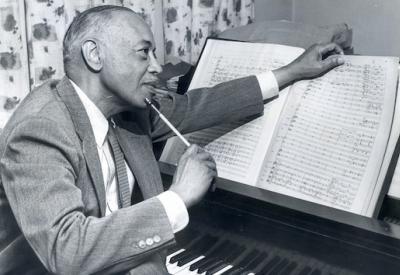
Composer Elliott Carter has been around for 100 years, literally. For 60 of them he has been at the forefront of serious American composition. But, like so many 20th-century composers, his music has had more limited exposure to audiences than his genius warrants. But that may be changing now. Next weekend, San Francisco Performances will divide two concerts devoted to his work between two generations of "young artists." The Pacifica Quartet will play his five string quartets on Saturday, Dec. 6. The next day, Dec. 7, Ursula Oppens will perform Carter's complete works for solo piano.
More "In the Sound Fields of Elliott Carter" »Religious holidays occur in the context of philosophies favoring the small over the big, the poor over the rich. Accordingly, this report will relegate the usual large and often costly events to an end-of-file roundup. Up front, there will be smaller, less familiar, and less costly events.
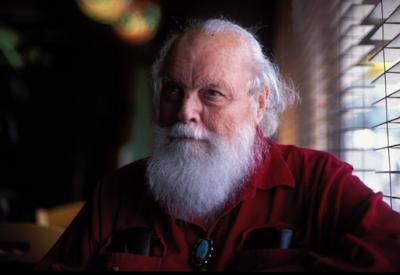
More "Holiday Music Tips With a Twist" »When experience comes to us in fragments, we often set about building them into a pattern that can be easily and neatly understood. That’s part of our human effort to understand the world: the need to find an interpretive key to a confusing set of experiences, but what if? What if, as in Samuel Beckett’s pathbreaking play Waiting for Godot, the key — like Godot — never comes?
Contemplating a small fragment of information can yield rich discovery, and become in itself the key to enlarged understanding.
Last week, Jason Victor Serinus investigated singer development in the San Francisco Opera Center's Merola and Adler Fellows programs. In this week’s conclusion of his two-part article, he explores the programs at the New York Metropolitan Opera and Houston Grand Opera.Metropolitan Opera Lindemann Young Artist Development Program
Talk about big guns. The Met has them all.
Who are they? Who will replace the generations of singers who thrilled us and brought us to tears when we first fell in love with opera and art song? Who will ensure that young, emerging singers are equipped to face the unique challenges of 21st-century operatic stardom without declining prematurely, as did Maria Callas, Elena Souliotis, Josè Carreras, Anna Moffo, Beverly Sills, Luba Welitsch, and Titta Ruffo (to name a few of the celebrated names of the 20th century)?
These are questions that every vocal aficionado asks. Some singers are destined to rise to the top.
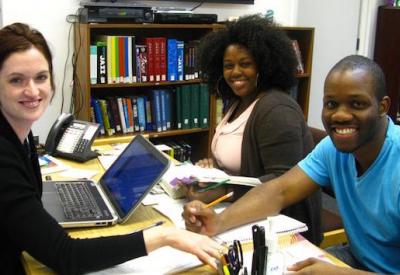
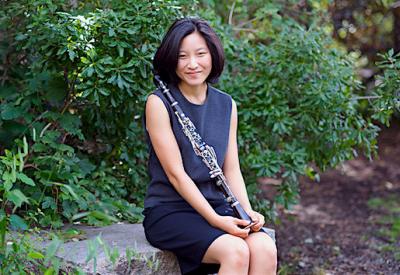
You know you are at a music conservatory when you are sitting in a history class and, in addition to the professor's voice, you can also faintly hear a soprano wailing in the next room, a violinist practicing fast licks in the room across the hall, a trumpet being blown in the room below, and a double bass rattling the ceiling from the room above. Music is literally all around you in a joyous din.
More "Eat, Sleep, Music" »St. Martin de Porres is a small parochial school in North Oakland. It is named for a 17th-century Dominican brother from Peru who was famous for establishing orphanages and children’s hospitals. He was canonized in 1962.
St. Martin’s has some 200 “students of color,” fully 90 percent of them on financial assistance, and as many qualifying for a free or reduced-cost lunch. But the school had no music program whatsoever.
More "Cloning El Sistema in Oakland" »St. Martin de Porres is a small parochial school in North Oakland. It is named for a 17th-century Dominican brother from Peru who was famous for establishing orphanages and children's hospitals. He was canonized in 1962. St. Martin's has some 200 "students of color," fully 90 percent of them on financial assistance, and as many qualifying for a free or reduced-cost lunch. But the school had no music program whatsoever.
More "Cloning El Sistema in Oakland" »We tend to think of composers in groups, whether by era, country, school, or style. Meredith Monk, however, has always stood apart from the crowd. Now nearly half a century into her career, this extraordinarily wide-ranging artist continues to occupy a singular space in contemporary music.
Since the mid-1960s, Monk's work as a composer, vocalist, choreographer, director, and performance artist has yielded dozens of new works, from the groundbreaking opera Atlas (1991) to intimate theater pieces for her own Meredith Monk Vocal Ensemble.